Monitoring And Alerting In Airflow
Effective workflow management demands robust oversight and immediate notifications for operational efficiency and proactive resolution.
Introduction to Airflow Monitoring and Alerting
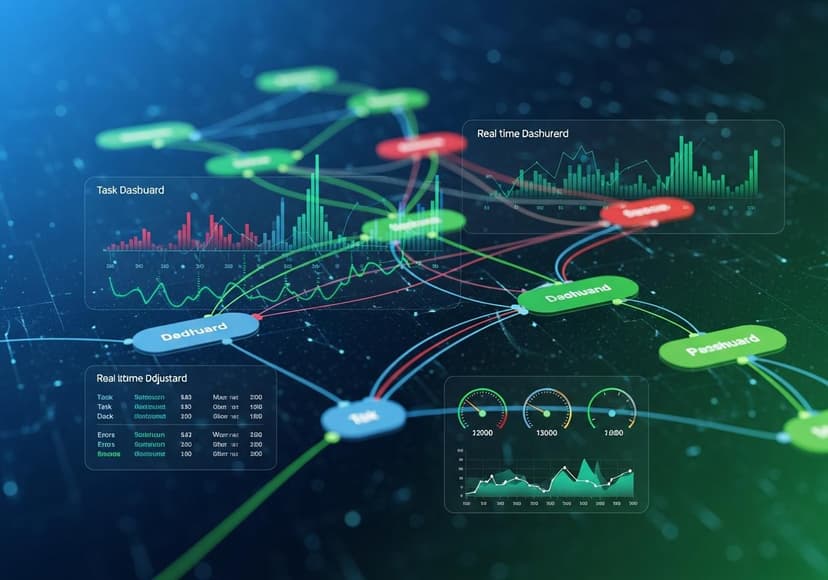
In the realm of workflow orchestration, Apache Airflow has become the go-to tool for managing complex data pipelines. However, just deploying Airflow isn't enough; continuous Airflow monitoring and effective Airflow alerting are crucial to ensure your data pipelines run smoothly. Monitoring tools allow you to keep an eye on DAG performance, track task duration, and maintain overall resource utilization, all of which are key to maintaining the health and efficiency of your workflows.
The Importance of Monitoring in Workflow Orchestration
Why is pipeline monitoring so important? Because it gives you insights into how your workflows are performing. In addition to tracking basic metrics like task duration, a comprehensive monitoring setup will allow you to assess resource utilization, including CPU and memory usage. If tasks are consistently taking longer than expected, this could indicate a deeper issue that needs fixing. Factors like scheduler lag and worker health also need to be monitored closely to prevent any slowdown in your pipeline.
Key Metrics for Effective Airflow Monitoring
When it comes to monitoring your Airflow instance, there are several key metrics that you should focus on:
- Error Rate: A critical metric that helps you identify the number of tasks that fail in your workflows. A high error rate can lead to failures in downstream tasks and can severely impact your data quality.
- Failed Tasks: Keeping an eye on the number of failed tasks is essential for workflow reliability. Knowing which tasks fail will help you troubleshoot and fix issues before they escalate.
- Task Duration: Track how long each task takes to complete. Monitoring task duration can help you optimize your workflows and pinpoint slow points.
- Scheduler Lag: This metric will tell you how behind the Airflow scheduler is. A lag can indicate that your workflows are overwhelmed and that additional resources may be required.
- Worker Health: Keeping tabs on the health of your Airflow workers ensures that they are executing tasks correctly and efficiently. Sudden spikes in resource usage can trigger failures in this area.
Implementing a Monitoring Strategy
Having a solid monitoring strategy in place is just as crucial as the actual monitoring output. Make sure your team knows how to react quickly to alerts and has access to the necessary tools. This could involve integration with external alerting systems or using Airflow’s built-in task alerts. You can set up alerts to notify stakeholders when failed tasks occur or if the error rate exceeds a predefined threshold. Consider exploring resources such as energy efficiency in data centers for more insight into resource management.
Utilizing Alerting Mechanisms
Alerting is a natural extension of monitoring and serves to inform your team of any issues in real-time. Airflow allows for several configurations to alert users based on the behavior of tasks. This includes sending notifications through email or integrating with platforms like Slack. Proactively addressing issues like high error rates or prolonged task durations will save your team a lot of headaches and promote better data quality.
Tools and Integrations for Enhanced Monitoring
To elevate your Airflow monitoring experience, consider implementing third-party tools and integrations. Tools such as Prometheus and Grafana can be used to visualize metrics in real-time. This will allow your team to quickly identify patterns and potential bottlenecks and, in turn, address them as they arise. For a deep dive into airflow management, feel free to check out this insightful guide.
Conclusion: Continuous Improvement
In summary, monitoring and alerting in Airflow are not just add-ons; they are integral to successful workflow orchestration. Regularly check for scheduler lag, review worker health, and analyze your error rates. A proactive approach to monitoring will not only help ensure that your workflows are running smoothly but also allow for timely troubleshooting of failed tasks and improve your overall data quality. As with any operational aspect, continuous improvement should be your guiding principle. Don’t forget to consult other resources such as airflow management best practices for additional insights.
Posts Relacionados

10 Easy Energy Saving Habits For Your Home
Conserve energy at home: unplug electronics, use LED lights, adjust thermostat, seal windows, and embrace efficient appliances.

10 Tips For Home Energy Savings
Optimize home energy usage with these strategies for reduced bills and a smaller environmental impact.

3D Modeling Tools Beginners Guide
Discover user-friendly tools. Learn to create digital models, and bring your creative visions to life.